Live deployments on Metro Manila and provincial fleets
business@infralinxtech.com Mon–Fri, 8:30 AM – 5:30 PM PHT
Intelligent transport systems, Philippines

Every boarding counted.
Every trip visible.

InfraLinx designs, installs, and supports the sensing, tracking, and safety systems that show Philippine fleet operators what is actually happening on their buses — then turns it into data their teams can act on the same day.

0 Passengers counted, current trip
On 0 Off 0 Accuracy 97–98%
Field-validated counting

97–98% accuracy,
measured on real routes.

AI door cameras record boarding and alighting by door and by stop, distinguishing people from bags, handrails, and passing traffic rather than simply breaking a beam. Every install is calibrated to your vehicle and checked in live operation before we call it done.

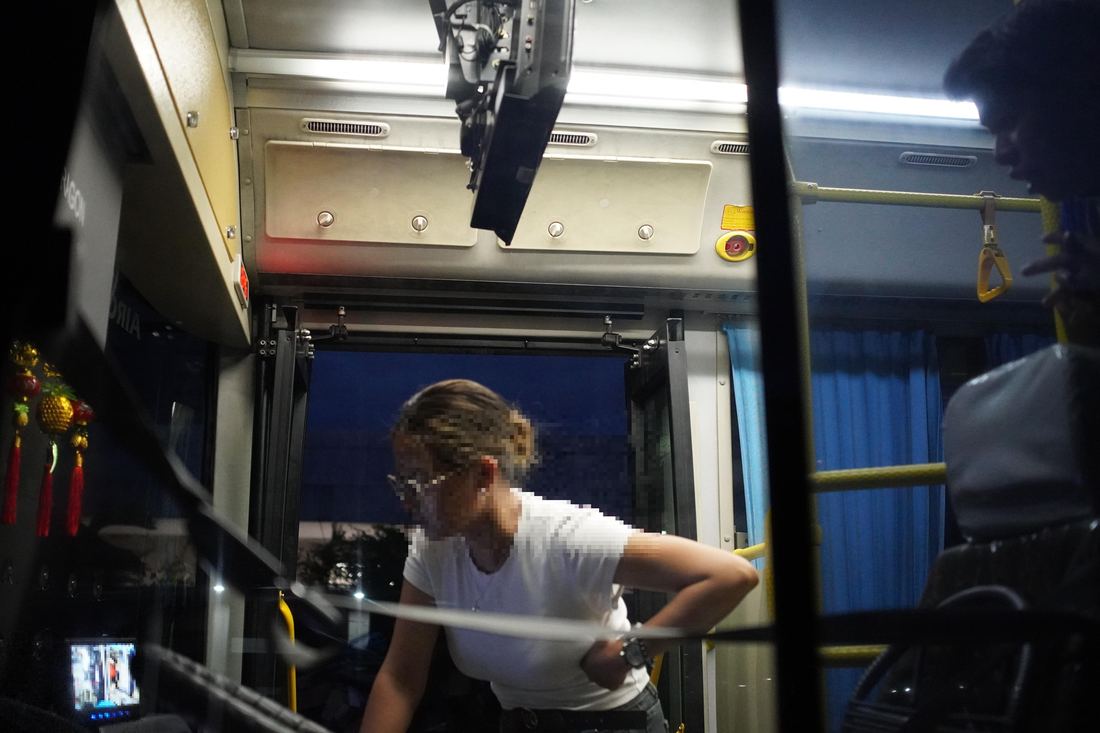
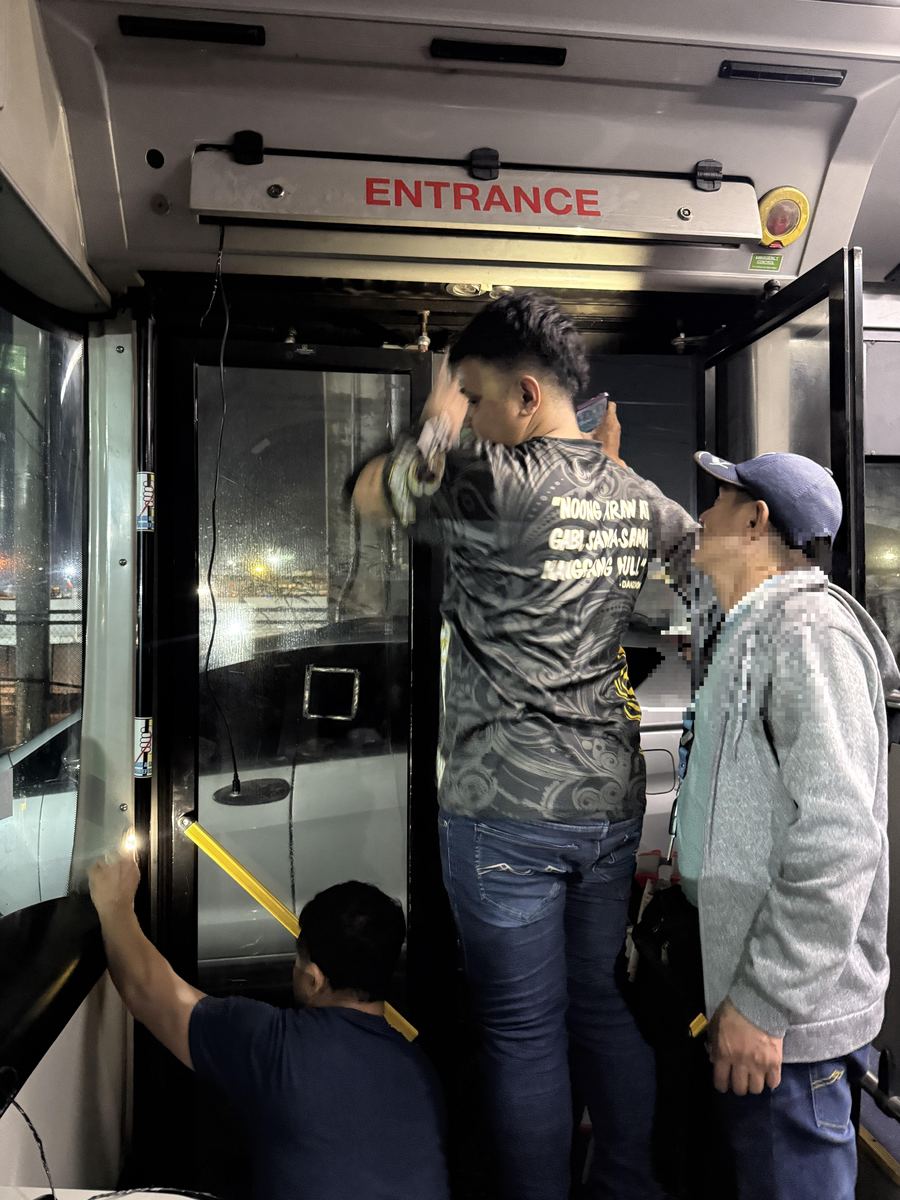
Technician fitting a counting camera above a bus entrance On site, not stock
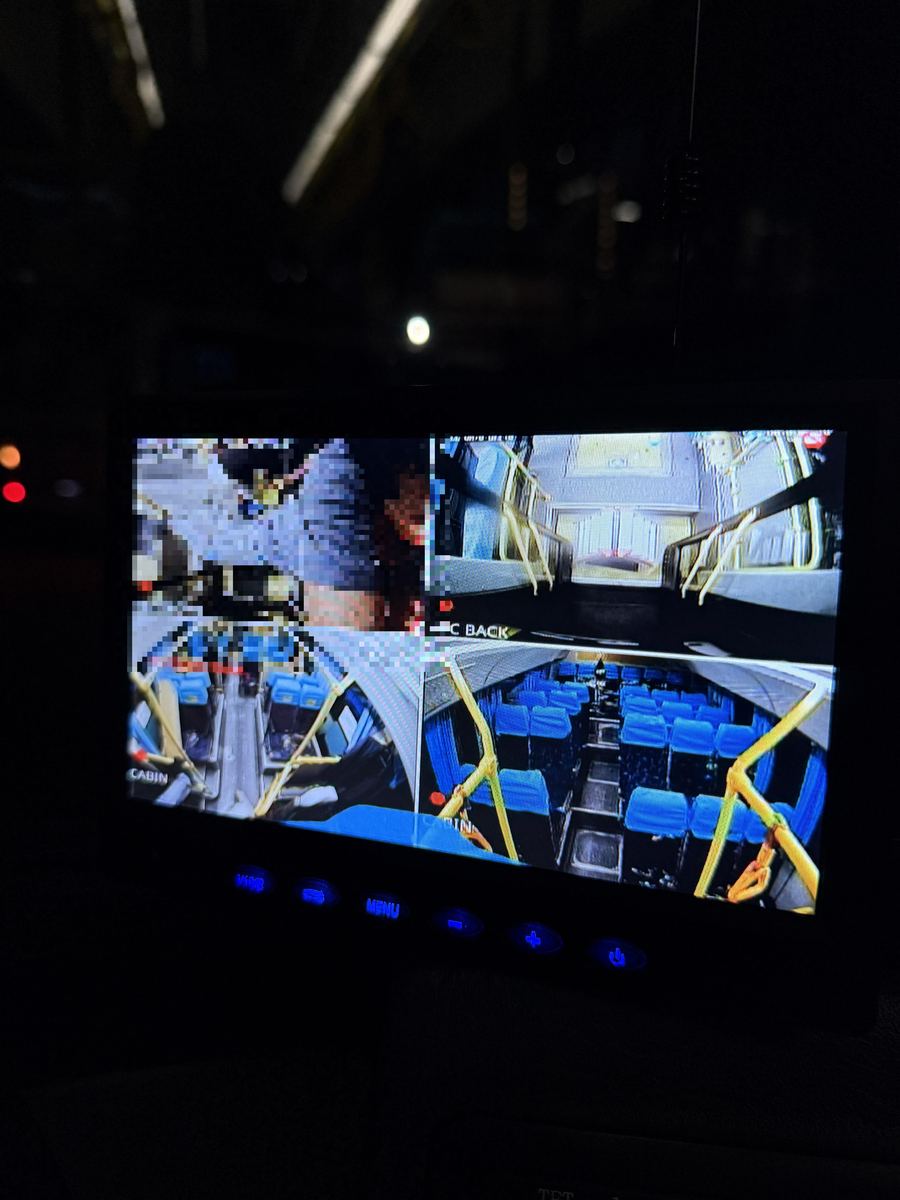
Camera mounted above the entrance, then checked live against the monitor before sign-off. Faces blurred for privacy.
The live platform

Dispatch on the big screen.
The same bus in your pocket.

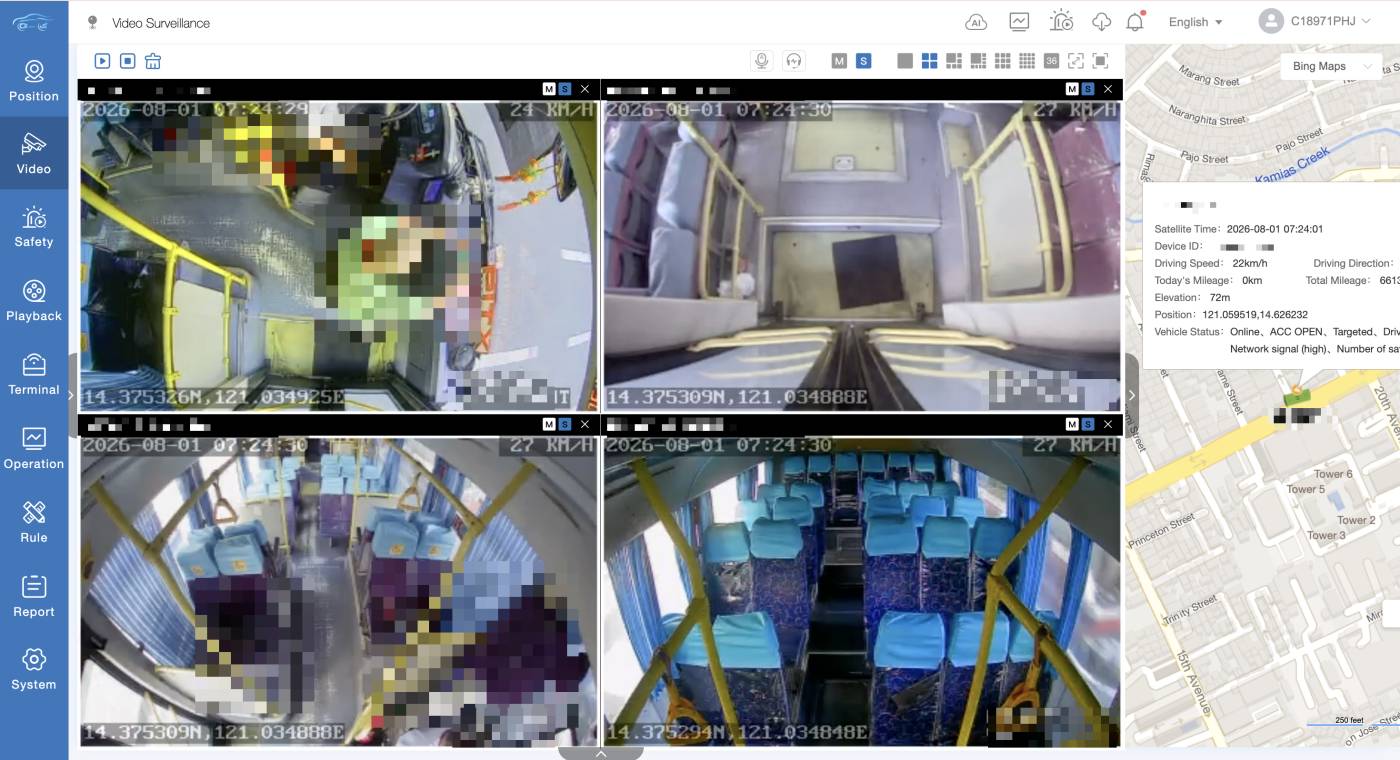
Once a unit is live, your team opens the dispatch dashboard in any browser and carries the same live view into the field on a phone. Position, video, safety events, playback, and reports — around the clock, with no request queue.

InfraLinx dispatch dashboard showing live vehicle video channels and map position Live capture, identifiers anonymized
Four channels live, per-channel bitrate, map position and full vehicle status.
Our systems

From the sensor on the door to the decision in the office

Each system works on its own. Together they run as one stack — AI sensing on the vehicle, connectivity in the field, analysis in the cloud, delivered and supported by one team.

Passenger counting

AI door cameras count boarding and alighting per door and per stop, calibrated to your vehicle and validated in live operation. The same cameras double as onboard security.

Learn more

Fleet tracking & live view

Live position, geofenced terminals, unauthorized stop detection, and complete trip history — with the vehicle's cameras openable from the same screen.

Learn more

Driver safety sensing

Driver monitoring, forward collision and lane departure warning, and blind spot detection — AI models running on the vehicle, alerting in the cab, logged for coaching.

Learn more

Platform & analytics

Vehicles, drivers, routes, and events in one browser platform, with ridership analytics, fare reconciliation, custom dashboards, and API integration into what you already run.

Learn more
What the vehicle actually senses

Find the capability that matches your problem

Every vehicle carries an AI-capable MDVR with GPS, 4G, and WiFi built in — one unit rather than a recorder plus a tracker plus a modem. Counting, monitoring, and detection are all computed onboard, so the cloud receives results instead of raw footage to analyse.

Automatic passenger counting

AI-based door cameras record boarding and alighting on every trip, by door and by stop — distinguishing people from bags, handrails, and passing traffic rather than simply breaking a beam.

Counts are calibrated against your actual vehicle configuration and validated in live operation, then reconciled against fare records so ridership and revenue can finally be compared.

97–98%Counting accuracy achieved in live deployment, measured against manual verification counts

Per door, per stop

Counting cameras match your door count — two on a two-door bus, one on a one-door bus. Nothing more is fitted than the vehicle needs.

Dual-purpose hardware

The same door cameras that count your passengers secure your vehicle. One installation, one wiring job, one warranty.

Works through dead zones

Counting continues through cellular gaps and tunnels. Data buffers onboard and syncs when signal returns, so no trips are lost.

Live occupancy

  • Running ON/OFF totals overlaid on the video
  • Current load per vehicle on the fleet map
  • Boarding curves by route and direction

Fleet GPS tracking and live view

Live vehicle position, geofenced terminals and garages, unauthorized stop detection, and complete trip history. Dispatchers respond to delays as they happen instead of reconstructing them afterwards.

Tracking answers where the bus is. Live view answers what is happening on it — open any unit from the dashboard and watch its cameras in real time, with footage recorded onboard for later review.

24/7Open any unit at any hour, with no scheduled windows and no request queue

Full vehicle status

Select a vehicle and the dashboard opens speed, heading, ignition, GPS fix, door state, occupancy, odometer, and active alerts — without radioing the driver.

Geofencing

Terminals, garages, and route corridors are fenced, so deviations and off-corridor stops surface the same day rather than at month end.

Trip history

Completed, cut short, or never started — every trip is reconstructable with time-stamped coordinates.

Headway control

See bunching as it forms and space your units against demand instead of against the timetable.

Driver monitoring, ADAS and blind spot detection

These are AI detection models running on the vehicle's recorder, not passive recording. Driver monitoring catches fatigue, distraction, and phone use with in-cab alerts. Forward detection warns of lane departure and collision risk.

Side sensing covers the blind zones where motorcycles and pedestrians disappear in Philippine traffic. Every event is logged for coaching and investigation, with the footage attached.

0sAlerts fire in the cab immediately — the decision is made where the driver is, not on a server

Driver monitoring

  • Fatigue and eye closure
  • Distraction and phone use
  • In-cab audible warning

Forward detection

  • Lane departure warning
  • Forward collision risk
  • Headway monitoring

Blind spot sensing

Side coverage for the zones where motorcycles and pedestrians vanish from the mirrors.

Protects drivers too

A driver accused of an incident he did not cause has evidence. Crews are told before installation what is recorded and why — the Data Privacy Act requires it, and it is what makes rollout go smoothly.

Fare reconciliation and leakage detection

Counting passengers is only half the value. A separate management dashboard — built for finance and internal audit rather than day-to-day dispatch — compares the passengers your sensors counted against the fares your ticketing system recorded, trip by trip and unit by unit.

Where the two figures diverge beyond normal tolerance, the trip is flagged and tiered by severity, so your team investigates the handful of trips that warrant it instead of auditing everything. For most operators this is where the system pays for itself.

Trip levelVariance flagged per trip and per unit, with patterns building by route and by shift

Counted against collected

Expected fare from counted passengers set against collected fare, flagged by bus and by trip.

Tiered risk flags

Severity tiers keep the investigation list short enough that someone actually works through it.

Shift and route patterns

One-off variance is noise. The same route on the same shift, week after week, is a finding.

Audit trail

Every flag keeps its source counts, footage reference, and timestamps, so a finding survives review.

Installed and verified

See the system go in. See it checked before we leave.

Real photos from actual deployments — not stock images, not renders. Faces are blurred for privacy, but the work, the equipment, and the verification process are exactly what they look like.

Counting camera being fitted above a bus entranceInstallation

Fitting a unit to a bus

Camera mounted above the entrance, then checked live against the monitor before the technician signs off.

Technician checking camera output on a monitor inside the vehicleCommissioning

Checked on the vehicle

System integration confirmed on the actual bus, not on a bench, with camera geometry calibrated to that vehicle type.

Field verification of the installed counting systemVerification

Validated in live operation

Every install is tested in the field before we call it done. Installation is scheduled around your dispatch, unit by unit, so service keeps running.

The live platform

What your team actually opens

The dispatch dashboard in any browser, and the same live view carried into the field on a phone. Both available around the clock — from the office, the terminal, or the road. Identifiers are anonymized here; operators see the full feed.

Dispatch dashboard with four live camera channels, map position and vehicle status

app.infralinxtechnology.com — position, video, safety, playback, and reports in one place.

Live fleet map

Every vehicle, its current load, and its position against the assigned route.

Passenger load by hour

Boarding curves per route and direction, so you add trips where demand actually sits.

Revenue reconciliation

Expected fare from counted passengers against collected fare, flagged by bus and by trip.

Unauthorized stop alerts

Boardings outside designated terminals and stops, surfaced the same day.

Driving events per unit

Speeding, harsh braking, and off-route stops from GPS — with the footage to review each event.

Exportable reports

Ridership and compliance reports ready for management review and regulatory submission.

Where we stand today

Small company, real deployments

These are the numbers we can point at right now, not projections. Everything on this page runs on fleets you can go and look at.

97–98%Counting accuracy in live deployment, against manual verification
2Bus operators running InfraLinx systems on live routes today
7Layers in the stack, from onboard sensing to fare reconciliation
1 dayThe reply time we hold ourselves to on pilot enquiries
Active pilot operators

Live and running with these operators today

Not projections, not a pipeline — real deployments on real routes right now.

EDSA CarouselLive

Jell Transport Inc.

High-frequency city corridor operation

Corridor
EDSA Carousel
Systems deployed
APC, onboard cameras, GPS tracking
Status
Live
NAIA & provincialPITXLive

UBE Express Inc.

Airport and provincial point-to-point routes

Corridor
NAIA terminal to provincial routes, and PITX
Systems deployed
APC, onboard cameras, GPS tracking
Status
Live
Solution lines

Public transport first. The capability travels.

We started where conditions are hardest — high-frequency Philippine bus operations, which is where our systems run today. The sensing, identification and reconciliation work behind them applies anywhere vehicles, stock or people need to be counted reliably. Each solution page says plainly whether it is deployed, sourced to order, or still being built.

See all solutions

Operator questions

Fair questions operators ask us, answered honestly

Nobody buys technology because it is modern. They buy it because something is costing them money, exposing them to risk, or making a decision impossible.

Passenger counting

We have counted by hand for twenty years. Why change now?

Manual counts are not unreliable because your people are dishonest. Counting sixty boarding passengers while collecting fares and watching the door is not something a human does accurately. Put two conductors on the same trip and you get two different numbers, and neither can be checked afterwards.

Ask us for the arithmetic
Onboard cameras

So we are buying counting cameras and security cameras — two systems?

No. The door cameras that count your passengers are the same cameras that secure your vehicle: one set of hardware, one installation, one wiring job. If you were already considering CCTV, passenger counting comes with hardware you were going to buy anyway.

How the cameras work
Compliance

We already have an LTFRB-compliant GPS. Is this not the same thing?

They serve different masters. A compliance device reports position to a government server so your franchise stays in order. It was never designed to tell you occupancy, reconcile fares, or score driver behaviour. InfraLinx is still working through accreditation — what we build is the operations layer on top.

Compare the two
Cost and payback

What does it cost, and how do we know it pays back?

Pricing depends on channel count, platform features, and fleet size, so any figure quoted before we have looked at your vehicles would be invented. We will show you the payback arithmetic on your own operating figures — and if it does not cover the monthly cost, you should not buy it.

Request a scoped number
Installation

How disruptive is installation? We cannot take units off the road.

Installation happens at your garage, scheduled around your dispatch. Units go in during downtime between trips or overnight, vehicle by vehicle, so service keeps running while the fleet is fitted progressively. Our own technicians do the work.

See an installation
Crew

Our crew will resist being monitored. How do other operators handle it?

Openly, and early. Footage protects drivers as often as it exposes them, and a conductor whose remittance is questioned has a passenger count backing him up. Under the Data Privacy Act crews must be informed and passengers need clear signage — we help you get that part right.

Driver safety systems
In development, not yet available

Counting and safety are live today. Here is what we are building toward.

These are not current products, and we are not going to describe them as if they were. They are the direction we are building in, on top of the sensing and platform work already running on real buses.

On the roadmap

Onboard ticketing devices

Ticketing hardware tied to the same counting and camera system already on the vehicle, so fare collection and passenger counts are reconciled by one platform instead of compared afterwards from two.

On the roadmap

Automatic fare collection

Cashless fare capture that reduces manual cash handling and gives a second verified revenue figure to check against the passenger count — closed at the point of payment.

Concept preview

Passenger information app

Live arrival for the next buses at a stop, and — because our counters already know the load — whether that bus has seats or is standing room only. It reads from units already installed, which is why we can build it at all.

About InfraLinx

We are a young company. Here is what that honestly means.

InfraLinx Smart Innovations Inc. was incorporated in 2026. We are not going to claim a twenty-year track record or a client list we do not have. If a decade of references is what your procurement process requires, we may not be the right fit yet — and we would rather tell you that now than three months into an evaluation.

What we can offer instead is systems already installed and reporting on Philippine buses, which we will show you running on live data rather than in a slide deck. You deal directly with the people who designed and installed them. When something needs fixing, it gets fixed that week.

Our tagline is “Linking smart infrastructure to a connected future,” and we mean it literally: technology that connects people to the infrastructure that moves them, in a country where that connection has mostly been missing. That is a large goal for a company this young, and we are not there yet.

Talk to the people who build it

Incorporated
2026, Philippines
SEC registration
2026050248641-98
Deployments
Metro Manila & provincial fleets
Accreditation
Permits in process
Office
Quezon City, Metro Manila

AI on the vehicle, integration end to end

Every unit carries an AI-capable MDVR doing real work onboard, and we specify, configure, install, and commission the whole system around it. A box of imported components is not a solution, and we do not sell one.

Local engineering presence

Our technicians install and maintain systems on the ground here. When a unit needs attention, a person responds — not an overseas support queue in another timezone.

Built around your operation

We customize the dashboard to the metrics your team is accountable for, and integrate by API with the ticketing, payroll, and ERP systems you already run.

Book a pilot

Find out what your fleet is actually carrying

Send us your fleet details and we will come back with a pilot scope for your routes — not a generic quotation.

Web
www.infralinxtechnology.com
Office
Quezon City, Metro Manila
Hours
Mon–Fri, 8:30 AM – 5:30 PM PHT
  • No fleet-wide commitment to start
  • Installation and commissioning by our technicians
  • Findings presented to your management before you decide

Request received

We will get back to you within one business day at the email you gave us.

What do you want to fix first?

Requests go directly to the InfraLinx team. We reply within one business day.

See what one week of your own fleet data looks like

Book a pilot and we will walk your team through live passenger counting, GPS tracking, and route analytics — using a real trip, not a slide deck.

Email the team